Improve Industrial Safety with These Seven Steps
Unfortunately, one of the first things to be cut when reducing a budget is safety training or key safety systems. While it may seem as though your business is saving money by removing safety training, it could instead be costing you more over time. Employees who are not sufficiently trained are more susceptible to accidents, which could put them out of work for good and force employers to find replacements. Depending on the employee’s job and skills, replacing them could cost anywhere from 5.8 to 213 percent of the employer’s salary, according to the Center for American Progress. This all said, it’s in everyone’s best interest to resist cutting safety training from the budget.
- Don’t Choose Budget Over Safety
- Create a Safe Work Culture
- Implement Fall Prevention Systems
- Hire the Right Contractors
- Perform Preventative Maintenance
- Encourage Communication
- Keep the Workplace Clean
When it comes to workplace safety, certain industries must take extra precautions to keep their workers safe on the job. Many workers in the oil and gas or construction industries come up against hazards that other industries do not, including falls, electrocution or contact with dangerous chemicals. In order to reduce the chance of workplace accidents, here are seven ways you can make your site safer:
When employers and their employees all see safety as a priority, the workplace will be safer. The problem is many employers fail to take the lead to promote a safe work culture, which can lead to careless attitudes in the workplace. To create a safe work culture, employers should lead by example and celebrate the successes of employees. It’s helpful for employers to recognize when employees are doing a good job and practicing safe work habits. This can keep employees wanting to do better and better, and such positive reinforcement goes a long way toward promoting safety overall.
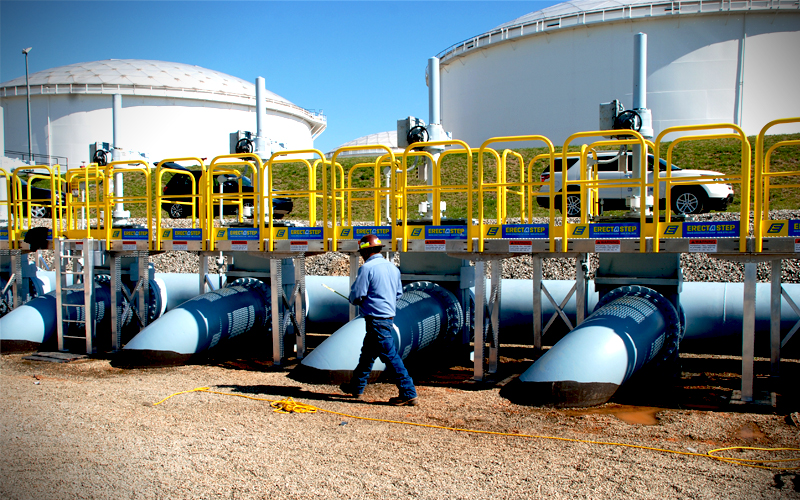
Fall prevention systems are essential in many industries and the Occupational safety and health administration has fall prevention regulations that all companies must adhere to. In order to remain compliant with OSHA’s standards, it is critical that you find fall prevention equipment that fits your application. If you need customizable fall protection, Erect Step offers stairs, platforms and gates that can all be customized and even repurposed to meet the needs of any application and reduce the risk of fall.
A business that hires independent contractors must take care to ensure that these workers are practicing safety in the workplace, just like their own full-time employees. While independent contractors operate under their own name, your partnership with them can also affect your company’s reputation. They are not your employees and are not required to have the same core values as your company, but the contractors you hire should have a good reputation in their line of work, and it helps to see eye to eye on the importance of safety. The Federal Trade Commission has some key tips for consumers when it comes to hiring contractors that business owners could find useful.
Conducting regular preventative maintenance on equipment can significantly reduce the chance of injuries in many industries. Inspection and maintenance of your equipment should be scheduled regularly so that your equipment is not only safe to use, but its lifespan is also extended. Regular preventative maintenance helps you identify potential hazards before they become a problem, and it will keep your workers safe from easily preventable accidents on the job.
Many workplace accidents occur because employees fail to speak up or report potential problems. This may be due to a work culture that does not encourage employees to communicate effectively with one another. You can increase communication in the workplace by holding regular meetings that give employees the chance to speak their mind and make improvements within the business. Encouraging employees to communicate about potential problems can help make the workplace safer by reducing potential hazards.
It may seem obvious, but many places have cluttered worksites that can spell disaster for companies — especially those in dangerous industries like manufacturing or construction. Reduce the risk of falls and trips by making sure your employees see the importance of keeping their work areas clean and free of debris. By emphasizing that it is for their own safety, employees may be more willing to keep their areas mess-free.
Improving Safety Starts with You
Whether you are a business owner or employee, everyone needs to do his or her part to promote a safe place to work. Employers hold much of this responsibility, and there are many ways in which they can improve safety. Industries that have increased risk of workplace accidents must be extra diligent about potential workplace hazards and implement key safety measures to keep their workers happy, healthy and productive.
Five Keys for Construction Safety
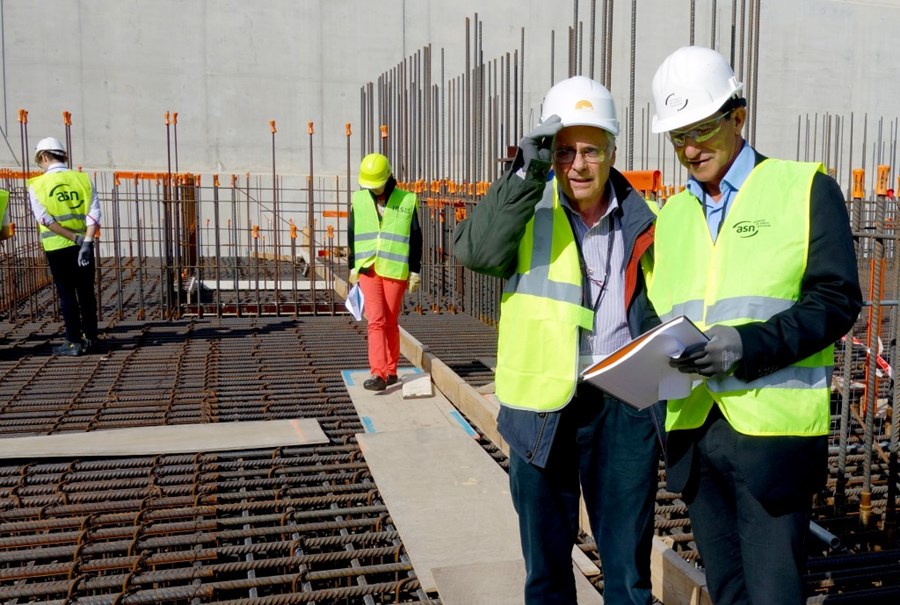 In 2009, studies showed that United States’ private construction workers had a serious injury rate of 9.7 injuries for every 100,000 workers. While this number might seem innocuous, it is nearly over three times that of all workers in America (3.3 per every 100,000) (CDC.gov). Furthermore, construction workers had the seventh-highest rate of injuries that required days off (382 per 10,000 full time workers).
As one can infer, the high rate of injury amongst construction workers is predominately due to the hazardous situations that often come with the vocation. Yet as of late, such injuries have been decreasing as more states and companies are focusing on implementing thorough construction safety protocols. Thus, in order to keep accidents on the decline, here are five keys for construction site safety.
- Fall Protection
- Holes
- Wall openings
- Established floors, balconies, and walkways
- Excavations
- Chemicals
- Carcinogens
- Toxic agents
- Compressed gases
- Explosives
- Flammables
- Organic Peroxides
- Job Hazard Analyst
- The Step-by-Step Process of a Job Hazard Analyst
- Review past history; conduct hazard analysis;
- Observe the segmented duties and note any exposures to potentially dangerous situations
- Establish a protocol for controlling hazards
- Write out protocol and ensure that it is implemented
- Maintaining a Clean Site
- Medical First Aid
Statistics from the same study mentioned above show that construction workers experienced 48 percent of all disastrous fall injuries within the contracting industry (CDC.gov). Considering this statistic and the potentially fatal nature of such drops, fall protection serves as a major key for construction safety.
Generally, fall protection systems are required if workers are exposed to the potential danger of falling ten or more feet (Note: it is the employer that is responsible for providing and implementing fall protection systems). Furthermore, there are four particular situations which require strict protocol in protecting workers from potentially fatal falls.
Although not as immediately observable as other site hazards, chemicals can be extremely dangerous, and sometimes even fatal. Thus, employers are required to provide a hazard communication program to employees who might be exposed to hazardous chemicals.
These hazard communication programs are extremely important as they provide specific insights about the specific employee protocol. Generally, such programs are informative in nature, detailing a variety of safety measures and the workplace’s chemical labeling system.
Hazard communication programs must also guarantee that all potential chemicals have been identified and evaluated to make sure that employees are safe from toxins or gases that may put their health in danger. Some of these chemicals may include:
In order to make sure that all potential hazards are identified, employers can hire job hazard analysts that specialize in inspecting and controlling potential hazards. A job hazard analyst does this by segmenting each job into a variety of duties. Each duty is then thoroughly examined to see if there is a safer way to accomplish each task.
For the entire duration of the job, employers are required to maintain safe and sanitary working conditions. At no point can any construction worker be exposed to conditions that are unsanitary or dangerous to their health.
In order to make certain that construction sites remain safe, any scraps with nails are to be removed from work sites, hallways, or stairs. Containers must also be required so trash, used rags, or other potentially unsanitary items can be stored away from workers. These containers must then be emptied at regular intervals so that waste does not build up.
In case accidents due occur, medical first aid services should be made readily available for every employee.
Key Requirements of Medical First Aid
Medical professionals must be available for examining or consulting on matters relating to health and well-being. If the construction site is a great distance from any hospitals or private practicing clinics, then an individual who is first-aid certified (U.S. Bureau of Mines, American Red Cross, or the like) must be present.
First-aid kits must be available as soon as they are needed. Contents ought to be stored in a weatherproof kit and should be checked regularly by the employer or the certified professional Proper transportation must be easily accessible in case there is a serious injury If out of range of local 911 services, the contact information of hospitals or ambulances must be thoroughly posted around the construction site Although this article reviewed five of the top keys for construction, it should be clearly noted that there are a variety of other construction safety essentials, as safety protocol typically differs on site-by-site basis. Therefore, when establishing proper safety methods, it is best to thoroughly inspect and analyze the construction site first, for every new site brings with it new challenges and risks.
Five Keys for Oil and Gas Safety
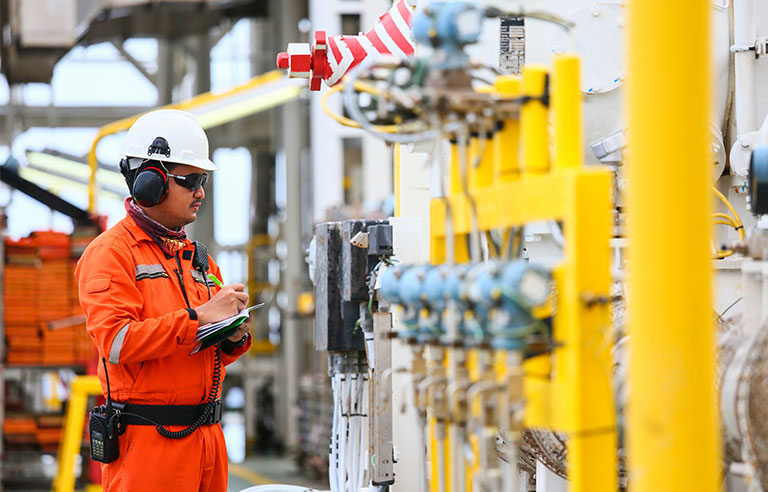 It's no secret that oil and gas production is a risky line of work. Between 2006 and 2014, 88 workers lost their lives in Alberta's oilfield. And with an economy that's expected to grow, there's a chance that the increased activity in the sector will lead to an uptick in the rate of fatal injuries.
Keeping oil and gas workers safe requires proactive measures. It's not enough to just track injury statistics; there is a variety of indicators that can help you identify issues and trends and shape an effective safety policy. Monitoring metrics should be part of any health and safety program, but it's important to know which ones are critical and worth tracking.
- Hazards in Oil and Gas Production
- Vehicle Accidents
- Fire and Explosion
- Hazardous Chemicals
- Various Oil and Gas Site Hazards
- Equipment malfunctions or failures
- Poor hazard communication
- Ineffective employee training
- Disengaged employees
- Infrequent or poor quality audits and inspections
Oil and gas work carries inherent risks, and those who work in the production of it must be aware of and understand the hazards they face.
When most people think of the risks oil and gas workers face, they probably picture fires, explosions, and exposure to hazardous gases. They might be surprised to learn that approximately one third of oilfield workers die on the job from automobile accidents. It makes sense when you stop and think about it. Extraction and production areas are usually in fairly remote locations. Workers and equipment have to travel long distances along highways to get to the worksite. And when they do arrive safely, there are still vehicles moving around the site itself.
Working with flammable gases means that fire and explosion are real threats to worker safety. Everything from well gases and vapors to hydrogen sulfide can be present in the work environment as a result of wells, trucks, production equipment, and surface equipment like tanks. And it doesn't always take much to ignite them. Sources of ignition include static and electrical energy sources, open flames, lightning, and welding tools.
Hazardous chemicals are common in oil and gas production. Employers need to conduct thorough hazard analyses and implement written procedures for adequately dealing with identified chemical hazards. Review these operating procedures annually to certify that they are current and accurate.
Other potential hazards that impact workplace safety include:
Quick Links
Contact Us
Location3545 Long Beach Blvd
City
Long Beach
Zip Code
90802
State
California, USA
info@miiosh.org